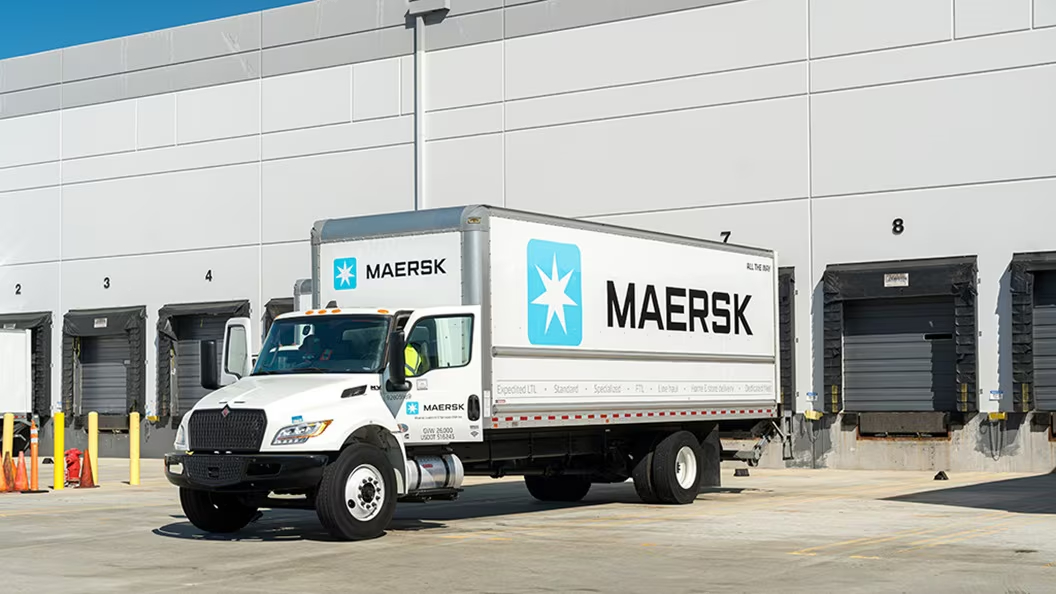
Maersk Enters $3 Billion U.S. Battery Logistics Market with New Ground Freight Capability
A.P. Moller - Maersk has introduced a dedicated lithium-ion battery transportation solution within its North American ground freight network, Maersk Ground Freight, to address the rising demand for the safe, compliant, and reliable transportation of Class 9 batteries across the continent.
According to Dataintelo's 2026 analysis of the global lithium-ion battery logistics market, the U.S. lithium-ion battery transportation market is valued at an estimated US$2.4–3.0 billion, with North America accounting for 27.3% of the global market. This new service strengthens Maersk's ability to support a rapidly expanding segment of the energy transition supply chain, particularly serving customers in the automotive, electric vehicle (EV), and advanced manufacturing sectors.
Strengthening Critical Infrastructure for the Energy Transition
As transportation continues to electrify, the movement of lithium-ion batteries has become an increasingly vital component of the clean energy ecosystem. Ensuring these batteries reach manufacturers and end users safely requires logistics solutions specifically designed to handle hazardous Class 9 goods at scale.
With this launch, Maersk is expanding its dangerous goods expertise beyond ocean and air freight into North American over-the-road transportation. The new solution enhances the company's integrated logistics capabilities while providing the specialized infrastructure needed to support the growing EV and battery supply chain across the region.
"The energy transition isn't just about what powers a vehicle — it's about the entire supply chain behind it. Moving lithium batteries safely and at scale requires purpose-built logistics infrastructure, and that's exactly what we've created."
- Bob Livingston, U.S. Head of Maersk Ground Freight Operations
Purpose-built for safety and compliance
The program is built around strict eligibility and documentation standards, including:
- New batteries only — no damaged, defective, recalled, returned, or waste units accepted
- State of Charge (SOC) maintained between 10%–60% for all outbound shipments
- Full documentation required for every shipment: Safety Data Sheet (SDS), Dangerous Goods Declaration, UN 38.3 Test Summary, SOC declaration, and watt-hour rating
- Hazmat-trained drivers across the network, with no DOT placarding or CDL hazmat endorsement required under U.S. DOT regulations
- Cross-border capability across the U.S., Canada, and Mexico, with compliance protocols tailored to each jurisdiction