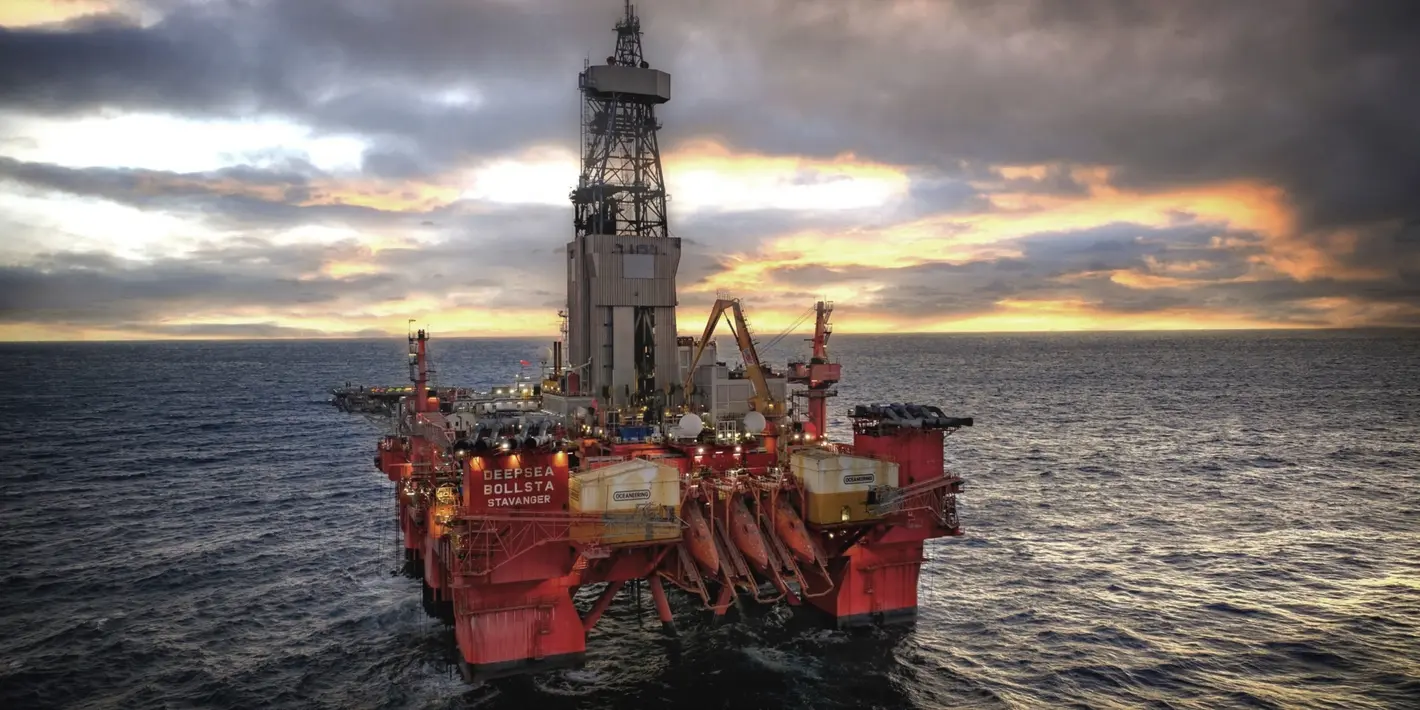
Investigation following well control incident on Deepsea Bollsta
The incident took place during well plugging operations on the Troll field, while a 13-3/8" casing was being cut at a depth of approximately 510 metres. Gas and fluid leaked onto the drill floor and into the shaker room, where rocks and drill cuttings are separated from the drilling fluid before it is recirculated into the well.
One individual experienced difficulty evacuating the room due to pressure differences caused by the incident. The person sustained minor injuries and received first aid on board after forcing their way out. The release of gas and fluid also caused damage to the room’s ceiling-mounted ventilation system.

"We're taking the well control incident that led to a gas emission on Deepsea Bollsta very seriously. There were considerable forces at play and gas came aboard. This was a dramatic event for those who were at work. At the same time, all safety barriers functioned as intended and the crew handled the situation well, thus preventing any escalation," says Rune Nedregaard, Equinor's Senior Vice President for Drilling and Well.
Automatic gas detection systems activated the rig’s safety protocols, and all potential ignition sources were immediately isolated. The crew aboard Deepsea Bollsta responded in accordance with procedures by activating the blowout preventer (BOP) and diverter system. The diverter directed gas, fluids, and pressure safely away from the rig before the BOP was fully closed.
The BOP sealed the well after 71 seconds, stopping the gas flow, and the situation was brought under control within 30 minutes. Following the incident, Equinor introduced several corrective measures, including an immediate requirement to close the BOP during shallow casing cuts and while pulling casing, regardless of activation timing.
The investigation determined that approximately 930 kilograms of gas were released over a short period. Based on this volume, the event was classified as a red 1 incident—the highest severity level in Equinor’s management system. Combustible gas was briefly present on the drill floor and in the shaker room; however, ignition sources had already been disconnected. The findings indicate that different conditions would have been required for ignition to occur.
The root cause was identified as the BOP being in the open position when the casing was cut, while confined gas was present behind the casing. Although the annulus behind the casing had been logged prior to cutting, the equipment used was not properly calibrated, resulting in the gas not being detected beforehand. The investigation confirmed that the incident did not pose a risk of an uncontrolled blowout. The gas originated from a limited volume trapped behind the casing and was not connected to the reservoir, with all reservoir barriers remaining intact.
"We've received a thorough investigation report that will form the basis for lessons learned. Among other things, the investigation points to technical factors that can prevent such incidents. Several measures were initiated immediately following the incident. Equinor will share the investigation findings and implemented measures with our suppliers. The Norwegian Ocean Industry Authority's investigation will also be important for Equinor's follow-up moving forward," Nedregaard says.