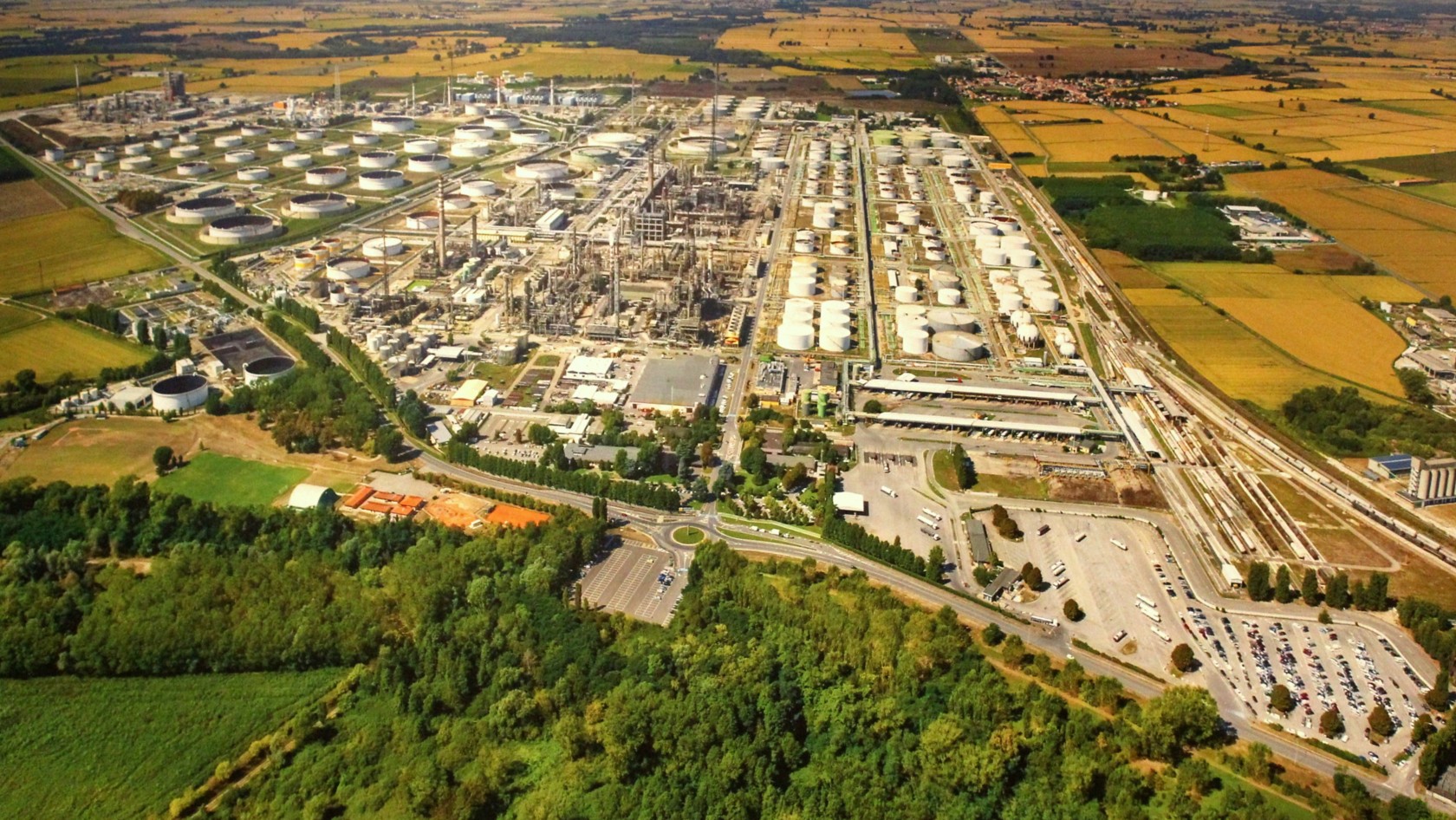
Eni: the investment in the development of biorefining in Sannazzaro de’ Burgondi is confirmed
Eni has announced a further major strategic investment in biorefining. Alongside the Priolo project, the company has approved the final investment decision (FID) to convert selected units of its refinery in Sannazzaro de’ Burgondi into a biorefinery.
Both developments mark a significant milestone in expanding Enilive’s biofuel production capacity. Scheduled for completion by 2028, the two biorefineries will offer high operational flexibility, enabling the production of both HVO diesel (Hydrogenated Vegetable Oil) and SAF-biojet (Sustainable Aviation Fuel).
The Sannazzaro de’ Burgondi conversion will not reduce the site’s existing conventional fuel output. Instead, it will add biofuel production from renewable feedstocks, broadening the plant’s product portfolio. The project includes converting the Hydrocracker (HDC2) unit using Ecofining™ technology and constructing a pre-treatment facility for waste and residual feedstocks, which are central to Enilive’s HVO production. Hydrogen will be supplied by existing facilities, while logistics systems and links to airports across Lombardy will be upgraded to support the new configuration. The facility is expected to process 550,000 tonnes per year, with flexibility to switch between SAF-biojet and HVO diesel depending on market demand.
Meanwhile, the Priolo biorefinery — currently in preparatory stages ahead of procurement and construction contract awards — will have a production capacity of 500,000 tonnes per year. It will also provide substantial flexibility to produce either HVO diesel or SAF-biojet in response to market conditions. The Priolo project forms part of Versalis’ transformation plan for its basic chemicals business and will be developed within the existing industrial site, replacing the former cracking plant that ceased operations last year and is now being dismantled.
Through Enilive, Eni is currently the second-largest producer of HVO biofuels — including both diesel and SAF — in Europe. The company plans to expand its biorefining capacity from 1.65 million tonnes per year today to over 3 million tonnes by 2028 and more than 5 million tonnes by 2030, with the potential to produce up to 2 million tonnes of SAF annually by the end of the decade.